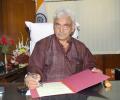
Manoj Sinha, earlier minister of state for railways, will be tasked to conduct the auction and deal with issues like net neutrality.

Of the total proposed allocation, over Rs 1 lakh crore is meant for BSNL and MTNL-related expenses, including Rs 82,916 crore infusion in BSNL for technology upgradation and restructuring at BSNL.

Internet major Google has appointed former joint secretary at Niti Aayog Archana Gulati as head of public policy in India. A Google spokesperson confirmed the appointment. Messages sent to Gulati elicited no immediate reply. Gulati was looking after digital communications policy matters at the government think tank and took voluntary retirement in April last year.

Telecom services providers have urged the Ministry of Finance to suspend the universal service obligation (USOF) till the existing corpus is exhausted. In their Budget recommendations, they have also pressed for an exemption from the service tax on "assignment of right to use natural resources" and the slashing of Customs duty on telecom equipment to zero. The Cellular Operators Association of India (Coai), which represents private sector telecom operators Reliance Jio, Bharti Airtel, and Vodafone Idea, called for abolishment of USOF levy.

To be headed by Ajay Bhattacharya of Universal Service Obligation Fund of Telecom Ministry, the five-member panel has recently been asked to submit a set of guidelines to suggest ways to promote renewable energy options in the sector within the next three months.

Telecom Minister Ravi Shankar Prasad is learnt to have approached Finance Minister Arun Jaitley for additional funds to carry out schemes committed under Universal Services Obligation fund scheme.


The whole process will take 2-3 months, which includes advertising, examination of the tender and signing of the agreement.

Analysts have pointed out that with the dues arising out of the SC judgment there could soon be only two private telcos in the country, and not three - Reliance Jio, Bharti Airtel and Vodafone Idea - as now.

Prime Minister Narendra Modi will launch the much-awaited 5G services in India on October 1, 2022, an official release said on Friday. According to the release, 5G to be launched by the Prime Minister in select cities, will progressively cover the entire country over the next couple of years. The cumulative economic impact of 5G on India is estimated to reach $450 billion by 2035. Capable of supporting ultra-high-speed internet services, the fifth generation or 5G is expected to unleash new economic opportunities and societal benefits, serving as a transformational force for Indian society.
Following is the chronology of the events in the 2G spectrum allocation scam in which the prime accused and former Telecom Minister A Raja was on Tuesday granted bail:
Following is the chronology of events in the 2G scam.
In a major development, the Ministry of Communications and Information Technology has cleared applications of nine telecom aspirants and is close to issuing them Letters of Intent. This will be followed by issuance of universal access service licences and allocation of spectrum.
The Department of Tele-communications is close to allocating start-up spectrum in seven more circles, in addition to Tamil Nadu, where the process is set to begin next week. According to the telecom ministry's plan, the companies would get 4.4 MHz each and the allocation would be completed within a fortnight.

Trade union leaders claimed that the strike would be even bigger than the one last year as the number of striking workers is expected to swell to 18 crore

The prime minister, who is visiting the US at the invitation of President Biden and First Lady Jill Biden, will join them for the state banquet along with a number of dignitaries on Thursday.
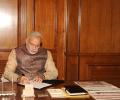
In the first secretary-level appointments by the Narendra Modi government, Rakesh Garg was on Sunday named the new telecom secretary while Jugal Kishore Mohapatra is to be secretary in the fertilizers ministry.
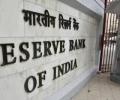
Focus to be on unbanked areas; initial capital is set at Rs 100 crore; India Post can apply.

In a first, the Comptroller and Auditor General's (CAG) officers reached out to several ministries in the last week of April as part of a confidence-boosting measure. The meeting brought the CAG officials and those from the ministries across the table to discuss the pain points in their relations. CAG of India Girish Chandra Murmu took this novel step because of growing tensions between those audited and the auditor.

The push to connect India and drive a national fibre optic network, first approved by the last government in 2011, has made slow progress
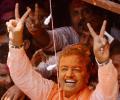
After the historic win of Bhartiya Janta Partyin Uttar Pradesh elections on Saturday, the talk about the face of chief minister candidate is the next question.

India Post may be keen to apply for payment bank licence.
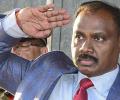
G C Murmu rarely speaks in public and when he does, his statements are always in lockstep with the thinking within this government.

While Rs 37,461.01 crore has been allocated for higher education, Rs 56,386.63 crore has been earmarked for school education.
A brief report card on Modi's ministers.

The 5G road map pursued by India should not only move the country forward but also result in progress of weaker sections of society.

If a feasible business model is worked out for cable operators, they will not only build the last-mile networks, but also market them among the local population telling people the benefits as well as how to utilise them

It will escalate costs, mandate regulator to check malpractices, set standards.

The first task before him is to get used to the idea of working with the Monetary Policy Committee

As deputy governor, Patel headed the RBI panel to draft the monetary policy report, which became the basis of the ongoing reforms at the apex bank

There was no word on whether or when Patel would be talking to the media about his priorities and plan of action as head of Mint Street
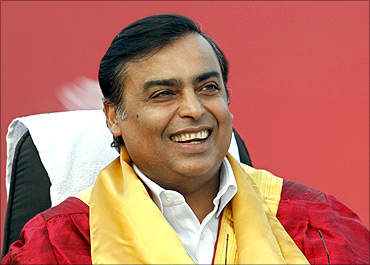
Payments banks will mainly deal in remittance services and accept deposits of up to Rs 1 lakh.

'India missed the software products revolution (and now is in danger of missing the platform revolution), complacent that we are the software experts of the world based on IT services prowess,' points out Rajeev Srinivasan.

The Left unions want concrete action and not just 'assurances'.
Cashless transactions need ubiquitous connectivity, which we don't have. And connectivity needs political and administrative convergence, says Shyam Ponappa.

'It is in electronics that the gap between where we are and where we need to be is most obvious and most persistent.' 'It is not only a national security issue, but also a commercial issue,' argues Rajeev Srinivasan.

'The money is safe with the payment services solutions provider'.
 © 2026 Rediff.com - Advertise with us - Disclaimer - Privacy Policy - Sitemap - Feedback - About us - Terms of use - Grievances